Tuesday, September 1, 2009

Five Popular Design Portfolio Website Styles

Nice Portopolio.... Five Popular Design Portfolio Website Styles: "

Having a web-based portfolio is crucial for displaying your online and/or offline work. The key to an effective portfolio design is how you to set up the content. In this article, we are going to cover various ways designers and artists set up their portfolio site. We’re also going to look at some well-designed examples from each style.

1. Portfolio as the main focus

These portfolio websites are usually pretty simple, having some basic information on the front page. All the focus is geared towards the design work.

Leonardo Maia

Leonardo Maia

skillicorn

skillicorn

Juan Diego Velasco

Juan Diego Velasco

Fred Maya

Fred Maya

Ersel TANIR

Ersel TANIR

just.dot

just.dot

Caitlin Hathaway

Caitlin Hathaway

2. Featured Work/Navigation as the main focus

This variety of portfolios usually consists of the designer displaying their design projects in a "featured" section on the web page. In addition, the designer can use their design/art - in combination with visual design elements - to set their home page as the jumping point to get to the rest of the site’s content.

CamiloHolguin.com

CamiloHolguin.com

theenergycell

theenergycell

84colors

84colors

Todd Stowell

Todd Stowell

Trevor Clark Photography

Trevor Clark Photography

Bohoe

Bohoe

Loukotka Design

Loukotka Design

3. Services/"About us" as the main focus

This portfolio design style typically has a short paragraph/blurb about the site owner’s services and/or a description of who they are. These descriptions are built either into the header, or just below it. These websites may have a weblog or a showcase of their work below the header, but the main goal is to center on what the designer does.

mark mcgall

mark mcgall

Havoc Inspired

Havoc Inspired

gummisig

gummisig

MadeToKill

MadeToKill

Southern Media

Southern Media

Falcone Creative

Falcone Creative

55Eleven

55Eleven

RonnieSan

RonnieSan

4. Blog as the main focus

This category of portfolio designs puts a weblog as the central attraction to the site, and is meant to show the personal side of the business owner or awards and accomplishment that they have received. New portfolio pieces and recently finished work are sometimes mixed into the blog as posts. It’s a great way to show potential clients their knowledge about the industry, as well as drawing in visitors by way of great content.

Tyler Gaw

Tyler Gaw

Kim Ellefsen

Kim Ellefsen

Function

Function

Jeffrey Sarmiento

Jeffrey Sarmiento

blenDesign’Blog

blenDesign'Blog

5. The single page portfolio

This type of portfolio design utilizes various coding techniques such as accordion style menus and page scrolling to move the user to different parts of the page.

ftdesigner.net

ftdesigner.net

Little Red

Little Red

Andrea Cima Serniotti

Andrea Cima Serniotti

Alexander Kaiser

Alexander Kaiser

fourtwo

fourtwo

Studio Skitz

Studio Skitz

What’s the best portfolio design style?

Do you have an opinion on which style is the best/most effective/most appealing? Are there other popular design portfolio styles that we didn’t mention? Share your thoughts in the comments.

Related Content

About the Author

Tyler Denis is a part-time freelance designer from Ashland, New Hampshire. He is also the creator/writer of the design blog Denis Designs/blog, a website dedicated to bringing quality tutorials and inspiration. You can follow him on Twitter or at his personal site, Denis Designs.

"

Sony A850 Full Frame DSLR

Sony A850 Full Frame DSLR: "

Sony today have announced their newest DSLR camera - the Sony A850 DSLR - a full frame DSLR that is set to put the pressure on Sony’s competitors when it comes to price.

Sony-A850.JPG

The Sony A850 has a recommended retail price of around $2000 USD - around $500 cheaper than Nikon’s D700, Canon’s 5D Mark II and Sony’s own A900.

The A850’s features include a 24.6 megapixel sensor, 3.0 inch LCD, 9 point Auto focusing (with 10 supplemental assist auto focus points), shutter speed of up to 1/8000 second, 3 frames per second shooting in continuous shooting mode and ISO up to 6400.

To go with the Sony A850 Sony today also released a new lens - the 28-75mm f/2.8 at around $800 (model number SAL2875).

The Sony A850 will be available in September and the new 28-75mm lens will be available from November 2009. The A850 is already available for pre-order on Amazon for $1999.99 USD.

Sony A850 DSLR News Release

Sony Brings Full-Frame Quality To A New Class Of DSLR Photo Enthusiasts

Aimed at experienced shooters looking for value and sophisticated SLR performance, Sony today introduced the full-frame ?850 camera and a new 28-75mm F2.8 lens.

The A850 model shares the same 24.6 megapixel sensor and most features of the flagship A900 camera, introduced last year, but will be available for just under $2000 (body only).

“Sony is bringing the benefits of a full-frame digital SLR camera to a broader group of consumers,” said Kristen Elder, director of AMC business unit in the Digital Imaging Division at Sony Electronics. “The ?850 strengthens Sony’s alpha DSLR line, which now offers models in each step from high-end professional down to the amateur enthusiast.”

The A850 camera is designed to deliver ultra-fine picture quality with a high resolution, 24.6-megapixel, 35-mm full-frame Exmor™ CMOS sensor and fast image processing with dual BIONZ™ processing engines. It also offers high-speed continuous shooting of 24.6 megapixel images at up to three frames per second.

Ultra-Fine Images The camera’s Exmor CMOS sensor delivers the photographic expressive power of wide angles and perspective that only a 35 mm full-frame sensor can offer, and is designed to take advantage of the resolving power of high-precision alpha lenses. Its high pixel count and large size provide enhanced image detail and a wider dynamic range for natural color reproduction and subtle tonal gradations.

Image processing gets a boost in speed and power from two BIONZ processing engines. Large amounts of data captured by the 24.6-megapixel sensor can be quickly processed to achieve a fast shooting response. Additionally, this dual BIONZ system applies advanced noise reduction algorithms producing images of exceptional quality and detail, especially at high ISO sensitivities.

Capture the Right Shot the First Time The camera’s innovative intelligent preview function takes the guesswork out of setting up a shot and the hassle of taking multiple shots to achieve a desired effect.

After pressing the depth of field preview button, the camera “grabs” a RAW preview image which is processed and displayed on the LCD screen. You can then fine tune white balance, determine the best level and effect of dynamic range optimization, adjust exposure compensation and check histogram data, all before you actually take the picture. Preview images are not recorded on the camera’s memory card, thus saving capacity.

The camera’s autofocus system features nine sensors with 10 assist points for improved tracking of moving subjects. A center dual cross sensor comprised of two horizontal and two vertical line sensors as well as a dedicated f/2.8 sensor are included to achieve greater precision, especially when using fast-aperture lenses.

Ultra-Bright Viewfinder with 98 Percent Coverage The ultra-bright viewfinder with 98 percent field of view coverage and 0.74x magnification enables accurate framing and preview. It features a high-power condenser lens, an eyepiece with high reflective-index glass, and a multi-layer, anti-reflective coating on optical surfaces to deliver its extraordinarily bright view.

A mirror box features a parallel-link mirror mechanism that moves on two horizontal axes to accommodate both the large full frame mirror and the body-integrated image stabilization system without increasing the camera’s size.

Anti-Shake System for a Full-Frame Sensor With its body-integrated SteadyShot INSIDE™ image stabilization, the camera achieves an anti-shake effect equivalent to shutter speeds faster by 2.5 to 4 stops. The anti-shake system stabilizes all Sony, Minolta and Konica-Minolta compatible lenses even wide angle or large aperture lenses.

Versatility to Unleash Creative Possibilities Other key features aimed to expand creative options include the Dynamic Range Optimizer (DRO) with five levels of user-selectable correction as well as DRO bracketing for enhanced scene analysis and graduation optimization. EV bracketing with ±2EV range makes it easy to create high dynamic range composite images.

With the camera’s HDMI™ output and Photo TV HD mode, your creative output can be enjoyed on a compatible HD television. This mode brings the look of actual printed photography to the television, by fine-tuning such image parameters as sharpness, gradation, and color reproduction.

The A850 model features a 3-inch (diagonally), Xtra Fine LCD™ screen (921K) making it possible to check focus and image quality with accuracy. It incorporates an easy-to-see display with a quick navigation menu to easily access common functions without interrupting your creative flow. A backlit LCD panel sits on top of the camera and displays key settings.

The camera includes dedicated slots for high-capacity Memory Stick PRO Duo™, Memory Stick PRO-HG Duo™, HX series and CompactFlash® media.

Bright Lens The choice of full-frame lenses to complement the ?850 model is enhanced with the new SAL2875 28-75mm F2.8 SAM lens. This compact, easy-to-carry lens is ideal for photo enthusiasts looking to add a bright, general purpose zoom to their collection of full-frame optics.

Delivering excellent imaging quality at an accessible price, it offers a wide F2.8 aperture over its entire zoom range. Ideal for day-to-day shooting tasks, its bright constant aperture makes the 28-75mm F2.8 SAM particularly valuable for depth-of-field control and available-light portraits.

Pricing and Availability The A850 (model DSLR-A850) will be available in September for about $2,000 (body only) along with related accessories. All A900 accessories are compatible with the A850 camera, including the dedicated vertical grip (model VG-C90AM). The SAL2875 lens will be available in November for about $800.

Post from: Digital Photography School - Photography Tips.

Sony A850 Full Frame DSLR

"

Olympus E-30 Review

Olympus E-30 Review: "

To sit happily with the company’s flagship and much higher-priced DSLR the Olympus E-30 had to forgo a few bells and whistles — but then it added a few that should delight photographers with high ambitions but little skill.

Olympus E-30 1.jpg

The Olympus E-30 has 12.3 million pixels on its Live MOS sensor — two megapixels and a bit more than the E-3!

The E-30 is smaller and lighter than many maker’s top end models… that’s how Olympus does things. With relatively few external controls, the LCD menu options will take you pretty well anywhere you want to go.

Using the Four Thirds system you can attach lenses from companies such as Leica, Panasonic and Sigma… oh and Olympus of course!

Olympus E-30 Features

oly_e-30-back.jpgLive View is available on the 6.9 cm LCD screen, backed up by a bright optical finder that gives you a rundown on the camera’s status: aperture, shutter speed, ISO setting, meter setting and shot count.

The camera can shoot at a rate of five full res frames for as long as you hold down the button and your memory card keeps writing.

You can also preset the rate of shooting anywhere from one to four frames per second.

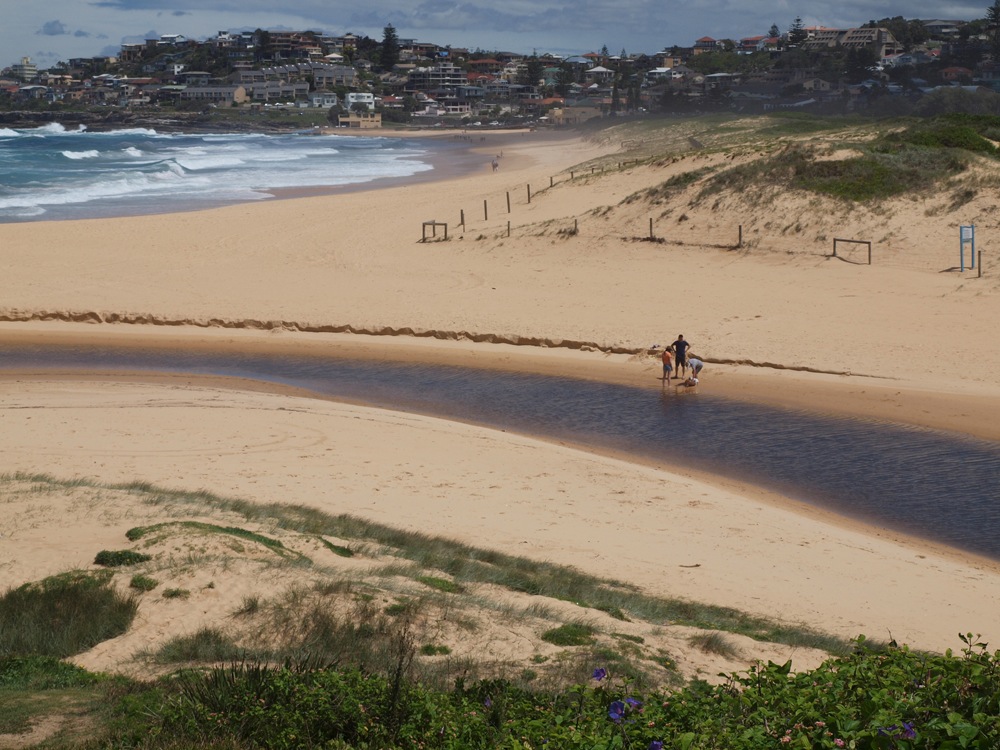
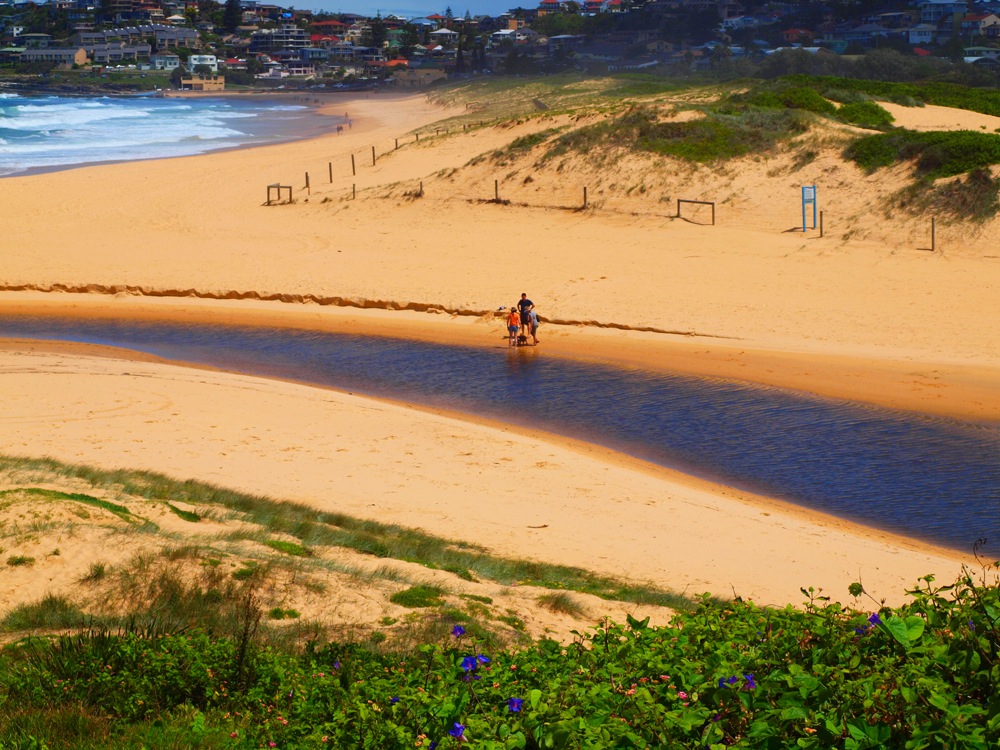
Art Filter Selection: I’ve often looked with suspicion at DSLRs that have scene modes that have little more appeal than sheer novelty but in the Art Filter selection, the camera sure pressed my buttons.

North Curl Curl no filter.jpg

North Curl Curl Grainy Film filter.jpg

North Curl Curl Pop Art filter.jpg

Choose from Grainy B&W (pictured above), Pop Art (pictured above), Soft Focus, Pale & Light Color, Light Tone and Pinhole. Two that took I particularly liked were Grainy Film and Pinhole… having messed around with colour to B&W conversion in Photoshop I fell upon the E-30’s approach with some excitement. The results are stunning.

There are other scene modes: Children, High and Low Key, Candle Light etc… ideal for the less courageous and with limited experience.

A feature not seen often is multiple exposure: the E-30 can shoot a final, layered collection of two, three or four shots. The brightness of each can be set to half, a third or fourth of the final single exposure. You can also begin with a RAW image and layer extra shots over it. Then, if you’re really adept, you can compress your layer of four and lay another four over it!

The E-30’s maximum image size of 4032×3024 gives a sharp 34×26 cm print at 300 dpi. The camera also offers other aspect ratios: like 4:3, 3:2, 6:6, 5:4, 16:9 and more. The images are written to memory as uncropped RAW images, complete with a suggested border indicating the chosen aspect ratio. A nice touch.

Image stability has four settings: on and off plus one each for panning a moving subject with the camera panning horizontally or panning vertically (some call this tilting). This allows you to capture a moving subject minus the shake but with a desirable blurring of the background.

Auto focus is well treated and uses an eleven point detection system plus the option of single frame AF detection (S-AF), continuous subject tracking (C-AF) plus manual focus. Each of these can be manually fine tuned.

The shutter speed range runs from 60 seconds to 1/8000 second — plus Bulb for time exposures. Flash sync is at 1/250 second. Image capture can be in RAW or JPEG or RAW+JPEG, with the latter in variable qualities; Live View’s brightness level and frame rate can be adjusted; face detection is available.

And one final novelty: a Level Gauge can be called up in the viewfinder and LCD screen. You would be surprised at how often you shoot pictures off level. I was!

Comment

An easy camera to use. The exposure metering is right on the button and the auto focus system very responsive. Art Filters are a winning feature and the options in flash are worth investigating… first and second shutter curtains plus the ability to control output manually.

North Curl Curl surf club 3.jpg

Image quality: very, very good. But you will be a little surprised at the noticeable barrel distortion in the 14-42mm kit lens.

Olympus E-30 Specifications

  • Image Sensor: 12.3 million effective pixels.
  • Metering: ESP multi-pattern; centre-weighted; spot.
  • Effective Sensor Size: 17.3×13.00mm.
  • Memory: xD-Picture Card and CompactFlash cards.
  • Image Sizes (pixels): 4032×3024, 3200×2400, 2560×1920, 1600×1200, 1280×960, 1024×768, 640×480.
  • File Formats: JPEG, RAW.
  • ISO Sensitivity: Auto, 100 to 3200.
  • Flash: Auto, red-eye reduction, red-eye reduction slow sync, first and second curtain sync, forced on and off, manual.
  • Power: Rechargeable lithium ion battery, AC.
  • Dimensions: 141.5×107.5×75 WHDmm.
  • Weight: Approx. 655 g (minus battery).
  • Current Prices: The Olympus E-30 is currently priced at Amazon at $949.95 (body only) and $1,049.95 (body plus f3.5-5.6/14-42mm kit lens.

Post from: Digital Photography School - Photography Tips.

Olympus E-30 Review

"

detikcom : IBM Kembangkan Remote Control Facebook

title : IBM Kembangkan Remote Control Facebook summary : Santai di depan televisi tampaknya bakal makin asyik. Cukup dengan remote control dan tetap duduk nyaman, pemirsa bisa berbagi cerita tentang siaran favorit via media online seperti Facebook ataupun Twitter. (read more)